OUR NEXT ONLINE OPEN EVENT IS HAPPENING 11 SEPTEMBER. DON’T MISS YOUR CHANCE TO LEARN ABOUT YOUR NEW CAREER! • THE ‘BSC (HONS) NUTRITIONAL THERAPY’ AND ‘CERT HE PERSONALISED DIET AND HEALTH’ APPLICATION DEADLINE IS CLOSING SOON – APPLY TODAY! • WE HAVE A NEW, LEVEL 7, POSTGRADUATE COURSE LAUNCHING FEB 2027 FOR MEDICAL PROFESSIONALS, ALLIED HEALTHCARE PRACTITIONERS AND CAM PRACTITIONERS • FROM THE VAULT: EXPLORE COMPLETE BACK ISSUES OF OPTIMUM NUTRITION MAGAZINE FOR FREE • BOOK YOUR TICKET FOR THE HEATHER ROSA TRIBUTE AND MITOCHONDRIA EVENT ON 30 OCTOBER •
OUR NEXT ONLINE OPEN EVENT IS HAPPENING 11 SEPTEMBER. DON’T MISS YOUR CHANCE TO LEARN ABOUT YOUR NEW CAREER! • THE ‘BSC (HONS) NUTRITIONAL THERAPY’ AND ‘CERT HE PERSONALISED DIET AND HEALTH’ APPLICATION DEADLINE IS CLOSING SOON – APPLY TODAY! • WE HAVE A NEW, LEVEL 7, POSTGRADUATE COURSE LAUNCHING FEB 2027 FOR MEDICAL PROFESSIONALS, ALLIED HEALTHCARE PRACTITIONERS AND CAM PRACTITIONERS • FROM THE VAULT: EXPLORE COMPLETE BACK ISSUES OF OPTIMUM NUTRITION MAGAZINE FOR FREE • BOOK YOUR TICKET FOR THE HEATHER ROSA TRIBUTE AND MITOCHONDRIA EVENT ON 30 OCTOBER •
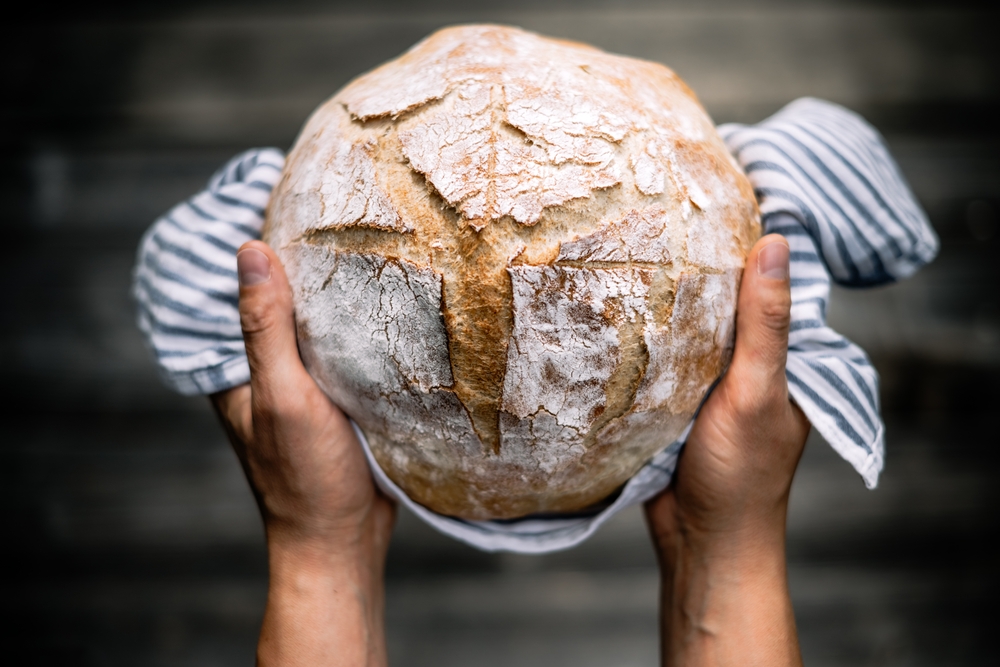
Is your freshly baked loaf hiding more than you think?
caption
Time to use your loaf?
image credits
Shutterstock
CATEGORY
Interview
TAGS
breadfibrenutrition
AUTHOR
Natalie Li
READ TIME
7 Minutes
PUBLISHED
18 February 2026
SHARE
Chris Young unpacks the truth behind Britain’s daily loaf, revealing how additives, fibre gaps and loose labelling shape what we eat, and why Real Bread Week is the moment to rethink what “freshly baked” really means. Natalie Li writes
Walk into any British supermarket and you’ll find an aisle that looks reassuringly familiar. That warm, comforting, unmistakable scent of “freshly baked” bread.
Soft white loaves, seeded “artisan style” batons, sourdoughs. Bread is the great democratic food: cheap, convenient, and eaten by almost everyone. Yet, beneath the crust, something far more complicated is going on.
Chris Young, coordinator of the Real Bread Campaign, part of the charity Sustain (the alliance for better food and farming), has spent years trying to get the nation to look more closely at what’s actually in its daily loaf. When I ask him for his definition of “real bread”, he doesn’t hesitate. “It’s very, very simple,” he says. “The way we define real bread is just made without additives. So, no so-called processing aids, no other types of additives as defined in food law, and no chemical leavening and no baking powder or anything.”
In Chris’s world, bread is a spectrum. “We start with unleavened flatbread,” he says, “and we’re kind of on a journey to long fermented sourdough with baker’s yeast in between… just no additives.”
The fibre emergency no one talks about
If there’s one thing Chris gets animated about, it’s fibre. Not the stuff of nutrition trends (fibremaxxing, anyone?) that gets wellness influencers glowing on Instagram. It’s the boring, essential stuff.
“Fibre is one of the few food trends that we’ve seen in 17 years that we actually can get behind,” he says. “That actually makes sense.”
“We could be giving our microbiome and our gut health a lot more love,” Chris adds. And bread, he argues, is the simplest place to start.
A standard white sliced loaf contains around 2.5% fibre. “It can’t legally be sold as a source of fibre,” he points out. But start adding wholemeal flour, oats, pulses, or beans, and suddenly bread becomes a vehicle for one of the most important, and most neglected, nutrients in the British diet.
And yet, the average British lunchbox still leans heavily on the soft white loaf.
The complex fibre question
Not everyone agrees that fibre is essential.
Advocates of low‑fibre or fibre‑free diets, including some in the carnivore community, argue that humans can thrive without it, pointing to claims that the gut can adapt, that the microbiome may not require plant fibre to function, and that digestive comfort can improve when fibre is removed.
They suggest that the benefits attributed to fibre may instead come from simply removing ultra‑processed foods or reducing gut irritants.
The UPF question: is it the bread or the cocktail?
Of course, no conversation about bread in 2026 can avoid the ubiquitous three letters that have turned the food world upside down: UPF.
Ultra processed foods have become the nutritional bogeyman of the decade, and packaged bread is often seen as one of the culprits. Chris is careful not to catastrophise. “One slice isn’t going to kill you,” he says. “But the white sliced loaf is one of the most consumed ultra processed foods in the UK.”
The real issue, he argues, isn’t the bread itself, it’s the additives. “Are the emulsifiers in there contributing to poor health outcomes, either on their own or in combination?” he asks. “The really tricky thing is the potential cocktail effect. What happens when you combine additive X with additive Y, either in one product or across the diet?”
It’s a question researchers are only just beginning to unpick. The UPF category lumps together everything from fizzy drinks to factory bread to ready meals, making it hard to identify what’s actually harmful. Is it the processing? The additives? The low fibre? The hyperpalatability? Or the way these foods displace more nutritious ones?
The science is messy and the public conversation is even messier. But Chris’s advice is disarmingly simple: “Flip it over, read the ingredients list. If it’s got flour, water, yeast, salt, maybe some oil, maybe nuts and seeds, it’s real bread. If it’s got an E number in it, it’s not what we call real bread.”
Sourdough: miracle loaf or marketing myth?
Do you or dough you? (Shutterstock image)
Sourdough has become the sourdough of everything: fetishised, photographed, and often misunderstood. According to the Real Bread Campaign, many supermarket “sourdoughs” shouldn’t be labelled as such at all – “sourfaux”, Chris calls them.
But what about the health claims? Does sourdough really lower blood sugar, improve digestion, and deliver more nutrients?
The evidence is mixed. Some studies show lower glucose and insulin responses, likely due to lactic acid and slower carbohydrate availability. Others suggest the benefits depend on the individual’s microbiome, meaning sourdough might be brilliant for some people and irrelevant for others.
What is clear is that long fermentation changes the structure of bread. It can increase resistant starch, improve mineral absorption, and partially break down gluten (though not enough for anyone with coeliac disease). As sourdough teacher, Dr Vanessa Kimbell, puts it, “We’re not talking about a total health revolution the first time you have a slice of toast, but over time small daily decisions add up… and it is also delicious.”
Still, Chris is less interested in sourdough as a lifestyle accessory and more in the broader question: what kind of bread should the nation be eating?
The school food fight
Since 2009, the Real Bread Campaign has been pushing for higher standards in school meals. “We’ve been calling for a Real Bread standard on school meals for years,” Chris says. “Successive governments have just had no appetite for that.”
Now, with the School Food Review underway, there’s a rare chance to change that. The Campaign wants additive free bread, maximum salt levels, and minimum fibre levels, ideally wholemeal, to become the norm in schools.
“We are all about choice,” Chris insists. “We do say we think these things are better, but we’re not saying you must eat this or mustn’t do that.” Still, giving children a healthier default could shift the nation’s fibre intake in a single generation.
Back to the seed
Chris’s vision for the future of bread goes deeper than the loaf. “We’re saying, let’s go right the way back to the seed,” he says. “Are there better grains, more nutritious grains, more delicious grains that we can be using that will grow in this particular area without throwing the agrochemical arsenal at it?”
It’s a radical idea: bread not as a commodity, but as a regional, regenerative, flavour driven food. “Instead of an off-the-peg thing,” he says, “what grain might actually grow well in our soils in this particular part of the country?”
So… is supermarket bread good for you?
The honest answer: it depends what you buy, says Chris.
A soft white loaf won’t harm you. But it won’t help you much either, especially in a country where almost everyone is fibre deficient. A loaf with wholemeal flour, seeds, pulses, or oats? That’s a different story. A long-fermented sourdough made without additives? Better still.
But the real opportunity, the one Chris keeps returning to, is national, not individual. Bread is eaten by almost everyone. If we improve the bread, we improve the diet. If we improve the diet, we improve the health of the nation.
Bread making is a skill. It requires knowledge, but not actually a huge amount
Chris Young, Real Bread Campaign
And all it takes, he says, is going back to basics. “Bread making is a skill,” he tells me. “It requires knowledge, but not actually a huge amount… it is literally child’s play.”
He pauses, then smiles. “Mix them together, which is like making a mud pie… in the hands of a true artisan baker, it’s like alchemy. You can turn those three or four basic, frankly boring ingredients into gold.”