OUR FINAL IN-PERSON OPEN DAY OF THE YEAR IS HAPPENING 3 OCTOBER. DON’T MISS YOUR CHANCE TO LEARN ABOUT YOUR NEW CAREER! • FROM THE VAULT: EXPLORE COMPLETE BACK ISSUES OF OPTIMUM NUTRITION MAGAZINE FOR FREE • BOOK YOUR TICKET FOR THE HEATHER ROSA TRIBUTE AND MITOCHONDRIA EVENT ON 30 OCTOBER • THE ‘BSC (HONS) NUTRITIONAL THERAPY’ AND ‘CERT HE PERSONALISED DIET AND HEALTH’ APPLICATION FOR THE FEBRUARY 2027 COHORT IS NOW OPEN. APPLY BY 10 NOVEMBER TO TAKE ADVANTAGE OF OUR EARLY-BIRD DISCOUNT • OUR NEW, LEVEL 7, POSTGRADUATE COURSE FOR MEDICAL PROFESSIONALS, ALLIED HEALTHCARE PRACTITIONERS AND CAM PRACTITIONERS IS NOW OPEN FOR APPLICATIONS•
OUR FINAL IN-PERSON OPEN DAY OF THE YEAR IS HAPPENING 3 OCTOBER. DON’T MISS YOUR CHANCE TO LEARN ABOUT YOUR NEW CAREER! • FROM THE VAULT: EXPLORE COMPLETE BACK ISSUES OF OPTIMUM NUTRITION MAGAZINE FOR FREE • BOOK YOUR TICKET FOR THE HEATHER ROSA TRIBUTE AND MITOCHONDRIA EVENT ON 30 OCTOBER • THE ‘BSC (HONS) NUTRITIONAL THERAPY’ AND ‘CERT HE PERSONALISED DIET AND HEALTH’ APPLICATION FOR THE FEBRUARY 2027 COHORT IS NOW OPEN. APPLY BY 10 NOVEMBER TO TAKE ADVANTAGE OF OUR EARLY-BIRD DISCOUNT • OUR NEW, LEVEL 7, POSTGRADUATE COURSE FOR MEDICAL PROFESSIONALS, ALLIED HEALTHCARE PRACTITIONERS AND CAM PRACTITIONERS IS NOW OPEN FOR APPLICATIONS•
Dominique Ludwig, a leading nutritional therapist with 30 years of clinical experience, brings her evidence‑informed, fad‑free philosophy to life in her new book No Nonsense Nutrition, offering a clear, practical blueprint for metabolic health in a world overloaded with wellness noise.
Key takeaways
Dominique Ludwig champions a no‑nonsense, science‑informed approach to nutrition that cuts through wellness fads and focuses on metabolic basics.
Her Triple 30 method: protein, fibre, and plant diversity, offers a simple, sustainable framework for improving energy, satiety, and long‑term health.
By prioritising balanced meals over constant snacking, Ludwig helps people reduce “food noise”, stabilise blood sugar, and build real food confidence.
In the vast, often confusing landscape of modern wellness, a world filled with “glucose gurus,” “fitspiration” accounts, and a multi-trillion-pound industry, Dominique Ludwig stands out as a voice of evidence-informed sanity. With over 30 years in the field, Ludwig has seen trends rise and fall, from the low-fat obsession of the nineties to the current era of biohacking. But rather than chasing the latest fad, she has spent three decades refining a “biochemical” approach that prioritises satiety over calorie counting and consistency over perfection.
Her mission is clear: to give people “food confidence” and a “manual” for their own bodies through her clinical work and her new book, No Nonsense Nutrition.
Early days of nutritional therapy
Ludwig’s journey into nutritional therapy began in what she calls the “dark ages” of nutrition advice. Before the internet or social media transformed health into a curated aesthetic, she was a student in Manchester, UK.
“I think it was probably something else entirely [that drew me in],” she says, reflecting on her start. “When I was at school, I studied food and nutrition and biology together at A-level and found that really fascinating. But because we didn’t really have social media or very good careers advice, I thought, ‘I’m going to go and study this thing called home economics.”
My goal [in my nutrition work] is always to find the “Sherlock Holmes” answers to why someone isn’t feeling their best
After two and a half years at Manchester, the realisation hit that the traditional route wasn’t for her. “I realised after two and a half years that I didn’t like anything in the course, really, apart from the food side and nutrition,” she recalls. Following the advice of a tutor, she moved to King’s College London to study nutrition. “It wasn’t even cool. It wasn’t even a thing back then,” she laughs. “But it’s this combination of biology, physiology, nutrition, and it just clicked and I found my people.”
That scientific foundation has powered a career spanning 30 years and thousands of clinical cases. “I’ve probably worked with about four and a half thousand people in my time,” she notes, “and my goal is always to find the sort of ‘Sherlock Holmes’ answers to why someone isn’t feeling their best.”
The backlash against ‘perfectionist’ wellness
At the core of Ludwig’s “Renew Reset Recharge” programme is a focus on satiety. For many, the traditional “eat less, move more” mantra fails because it ignores the hormonal signals that govern hunger. “I would love to give every woman permission without guilt to have three good, balanced meals a day,” Ludwig says.
She highlights the importance of satiety (fullness) hormones like PYY, GLP‑1 and leptin. “Switching on satiety is an absolute game changer. It stops the ‘food noise.’ It stops you looking for your next hit of energy.” She is particularly dubious of the modern snacking culture, which she believes keeps people on a metabolic treadmill. “I would rather you took all the calories that you were going to snack on… and turn them into nutritious food – eating a proper breakfast, lunch and dinner.”
By avoiding the “glucose roller coaster” – the spikes and crashes caused by refined carbohydrates – Ludwig’s clients find they can finally manage their weight without feeling deprived. “I remember a nurse on my programme,” she shares. “She was crying for the years she struggled with food. She’d not eaten enough; she’d always been hungry. She felt like she wasn’t deprived anymore.”
The ‘triple 30’ framework and ‘no nonsense nutrition’
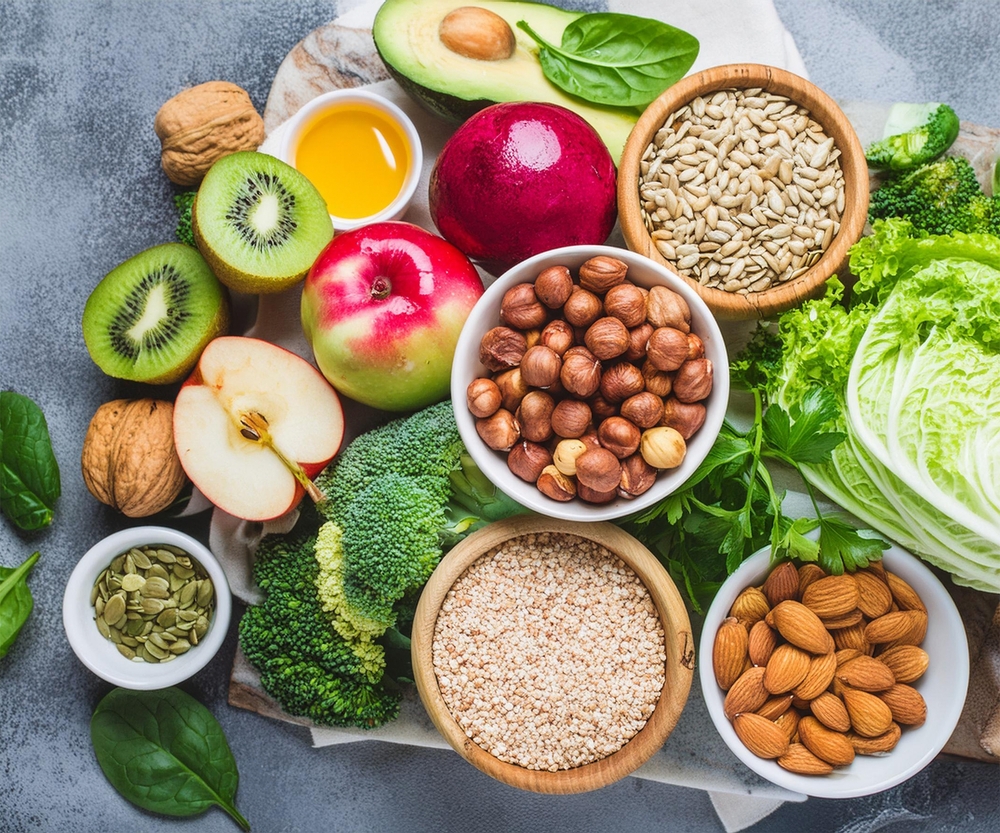
Plant diversity is key, argues Ludwig (Shutterstock image)
In her book, No Nonsense Nutrition: Six Golden Rules to Rewiring Your Approach to Food, Ludwig introduces a simplified “blueprint” for metabolic health. She uses a “Triple 30” framework to ensure nutritional density:
30g of protein per meal: “We need protein to support our muscle mass,” she explains, pointing to the risk of sarcopenia, an age-related, progressive loss of skeletal muscle mass, strength, and function, typically starting around age 30 and accelerating after 65. “Protein also triggers those satiety hormones in the small intestine.”
30g of fibre per day: Most people in the UK only get about 18g. “We have a huge fibre gap,” she says. “Fibre is what feeds our gut microbiome, I call it our ‘inner zoo’, and it keeps the glucose response stable.”
30 plants per week: Diversity is key to a resilient microbiome and a broad range of phytonutrients.
“It’s about being a bit of a Sherlock Holmes with your own plate,” she adds. “I have a mental checklist when I open the fridge: 1. Where’s my protein? 2. Where are my vegetables? 3. Where are my healthy carbs? 4. Where are my healthy fats? 5. Where’s my fruit?”
Advice for aspiring nutritional therapists
For those inspired by Ludwig’s 30‑year career and considering a path in nutritional therapy, she offers a blend of encouragement and rigorous standards. She views the profession as a calling that requires a balance of high‑level science and human empathy.
“I think the biggest advice I would give is to be a detective,” she says. “You have to love the ‘Sherlock Holmes’ work. You’re not just giving someone a diet sheet; you’re looking at their biochemistry, their lifestyle and their history to find out why the engine isn’t running smoothly.”
She emphasises that the field has evolved significantly since her days at King’s College. “When I started, it wasn’t even cool. Now, we have so much more data and research at our fingertips. But you have to be prepared to keep learning. I’ve spent 30 years in this, and I’m still looking at the research every day.”
For students, she stresses the importance of clinical hours and real‑world application. “Working with four and a half thousand people teaches you things a textbook can’t. You learn that a plan is only good if it works at the kitchen table. You have to be able to translate complex physiology into something a busy mum or a tired nurse can actually do.” She also advocates for professional accreditation, noting that having a solid “combination of biology, physiology and nutrition” is what allows a practitioner to cut through the “fads and silliness” that often plague the industry.
Muscle as ‘metabolic currency’
One of the most critical aspects of Ludwig’s work, particularly for those in midlife, is the preservation of muscle. She views muscle not just as a tool for movement, but as “metabolic currency.”
“As we age, our ability to process protein becomes less efficient,” she explains. This is why she emphasises high‑quality protein containing the amino acid leucine. “Muscle is what burns energy even when we’re resting. If we lose muscle, our metabolism slows down, leading to that ‘middle‑age spread’ people dread.”
She encourages a shift in mindset: “Don’t think about ‘weight loss’; think about ‘fat loss’ and ‘muscle gain.’ It’s about building a body that is resilient and strong for the future.”
Practicality at the kitchen table
Ludwig’s cookbook features family-friendly recipes (Shutterstock image)
Despite her deep scientific knowledge, Dominique is a realist. She knows that “wellness” has to survive the reality of a busy family kitchen. Her children, now computer scientists and engineers, were her first “test subjects” in balancing nutrition with real life.
“My son was once the most difficult eater on the planet. I’ve had to be patient,” she admits. She recalls a moment of triumph: “I’d made these quinoa and tofu burgers… and I said to him, ‘Gosh, let’s cook something really healthy,’ and he went, ‘No, no.’ Fast forward a few years and he asked: ‘Can we just have the quinoa burgers instead?’ I was air‑punching! It was a total win.”
Her first cookbook includes 100 recipes designed to be “balanced” and “family‑friendly,” such as her Firecracker Chicken. “It’s about making the food taste so good that you don’t feel like you’re on a ‘diet,’” she says. “It’s about finding the ‘benefits’ in every meal.” From her Red Lentil Bagel to her Savoury Start breakfasts, the focus is on swapping out refined, beige foods for nutrient‑dense alternatives that don’t sacrifice flavour.
A manual for life
Ultimately, No Nonsense Nutrition is intended to be more than just a cookbook. “I wanted to condense 20 years of clinical research and 30 years of experience into a book that will help more people who can’t get to see me in clinic,” Ludwig says.
She wants readers to understand their “biochemical uniqueness”. Whether it’s managing perimenopause, improving energy or simply escaping the glucose roller coaster, her message is one of empowerment. “I’m not trying to give people a ‘diet.’ I’m trying to give them a manual for their body.”
“Trust what your body is telling you,” she concludes. “If you’re hungry all the time, your biochemistry is trying to tell you something. We don’t have to be like, ‘Oh no, if I don’t want to go to the gym, that means I’m lazy.’ It’s about getting curious and asking: what do I actually need to nourish myself today?”
In the end, Dominique Ludwig’s “no‑nonsense” approach proves that the most effective way to be “well” is also the most human: eat well, move often and stop striving for a black belt in perfection.
Ludwig’s no‑nonsense quick tips
Close the fibre gap: “Aim for 250g of vegetables at lunch and dinner, roughly half your plate.”
The savoury start: “Avoid high‑sugar cereals. Try an omelette or my red lentil bagels to set your glucose for the day.”
Check your ‘zoo’: “Treat your gut microbiome like a zoo that needs a variety of plants to thrive.”
Snack with benefits: “If you must snack, make sure it has protein or fibre, like a handful of nuts or an apple, to avoid the sugar crash.”
Good to know
About Dominique Ludwig
No-nonsense advice
Dominique Ludwig is one of the UK’s leading nutritionists with over 20 years of clinical experience as a King’s College, London qualified nutritionist, nutritional therapist and Fellow of the British Association of Nutrition and Lifestyle Medicine (BANT).
Ludwig’s no-nonsense, science-backed approach, combined with her calm authority and delicious meals, has resulted in a fast-growing online community of over 700,000 followers and thousands of participants to her online health and diet plans.