OUR NEXT ONLINE OPEN DAY OF THE YEAR IS HAPPENING 14 NOVEMBER. DON’T MISS YOUR CHANCE TO LEARN ABOUT YOUR NEW CAREER! • BOOK YOUR TICKET FOR THE HEATHER ROSA TRIBUTE AND MITOCHONDRIA EVENT ON 30 OCTOBER • THE ‘BSC (HONS) NUTRITIONAL THERAPY’ AND ‘CERT HE PERSONALISED DIET AND HEALTH’ APPLICATION FOR THE FEBRUARY 2027 COHORT IS NOW OPEN. APPLY BY 10 NOVEMBER TO TAKE ADVANTAGE OF OUR EARLY-BIRD DISCOUNT • OUR NEW, LEVEL 7, POSTGRADUATE COURSE FOR MEDICAL PROFESSIONALS, ALLIED HEALTHCARE PRACTITIONERS AND CAM PRACTITIONERS IS NOW OPEN FOR APPLICATIONS •
OUR NEXT ONLINE OPEN DAY OF THE YEAR IS HAPPENING 14 NOVEMBER. DON’T MISS YOUR CHANCE TO LEARN ABOUT YOUR NEW CAREER! • BOOK YOUR TICKET FOR THE HEATHER ROSA TRIBUTE AND MITOCHONDRIA EVENT ON 30 OCTOBER • THE ‘BSC (HONS) NUTRITIONAL THERAPY’ AND ‘CERT HE PERSONALISED DIET AND HEALTH’ APPLICATION FOR THE FEBRUARY 2027 COHORT IS NOW OPEN. APPLY BY 10 NOVEMBER TO TAKE ADVANTAGE OF OUR EARLY-BIRD DISCOUNT • OUR NEW, LEVEL 7, POSTGRADUATE COURSE FOR MEDICAL PROFESSIONALS, ALLIED HEALTHCARE PRACTITIONERS AND CAM PRACTITIONERS IS NOW OPEN FOR APPLICATIONS •
The ancient Japanese ferment that could lift your mood
caption
Koji Rice
image credits
Shutterstock
CATEGORY
FoodHealth and wellbeingInterviewMental healthNutrition
TAGS
gut healthmental healthnutritionnutritional therapy
AUTHOR
Verónica Muñoz Martínez
READ TIME
10 Minutes
PUBLISHED
19 May 2026
SHARE
Key takeaways
Koji, the fermentation culture behind foods such as miso, soy sauce and sake, may support mental wellbeing by improving gut health and increasing nutrient absorption.
Experts explain that the gut and brain are deeply connected through the gut-brain axis, with gut health influencing mood, inflammation, sleep and emotional regulation.
Fermented foods rich in beneficial bacteria, such as kefir, kimchi, sauerkraut and miso, are increasingly being studied for their potential mental health benefits as “psychobiotics”.
Nutritional therapists working with ADHD, anxiety and disordered eating stress that supporting digestion and the microbiome can also help support emotional wellbeing and nervous system regulation.
Fermented foods have nourished humans for centuries. Now science is beginning to explain why they may matter just as much for the mind as for the body. Verónica Muñoz Martínez speaks to a leading fermentation expert and ION-trained nutritional therapists to explore why koji – Japan’s ancient fermentation culture – is becoming one of the most fascinating foods in the conversation around mental wellbeing.
What is koji?
Fermented foods are booming – kimchi, kefir, kombucha, you name it. A long part of ancient Asian cultures, the Western world is only now beginning to discover their benefits.
While some fermented foods are now commonplace on supermarket shelves, there is one you may never have heard of: koji.
And yet, you have almost certainly tasted it – just without realising. Every time you have stirred miso into a soup, poured soy sauce over sushi, or sipped sake, you have encountered one of the oldest fermentation cultures on earth.
Now, scientists and nutritional therapists are beginning to ask whether koji may offer something beyond flavour and culinary tradition: support for our mental wellbeing.
The health benefits of koji are remarkable, and they begin in the gut.
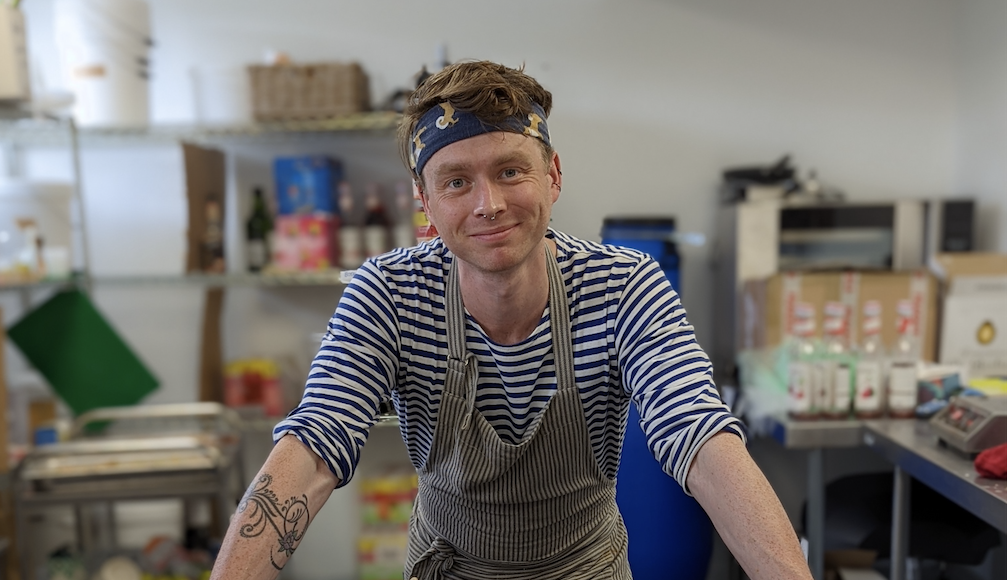
Robin Sherriff, author of The Science of Fermentation
Something else has pre-digested the food for you,” says Robin Sherriff, scientist and one of Britain’s leading fermentation experts. “There is much more available nutrition, and it is far easier to absorb.
Because koji’s enzymes essentially pre-digest food during fermentation, the nutrients it contains are far more bioavailable than those in their unfermented counterparts. In other words, the body has less work to do.
Becoming one of Britain’s leading voices on koji – with a following of over 100,000 across social media – was never part of Sherriff’s plan. He studied chemistry and biology, spent years working as a chef, line cook and bartender, and later embarked on a master’s degree in gastronomic science.
It was a research trip to Japan to write a dissertation about Japanese whisky that changed everything. There, he stumbled across a fermentation culture that was still almost entirely unknown in Europe and decided to bring it to the UK.
“I was living around the corner from a sake brewery,” he says, “so I knocked on the door.” The owner, a seventh-generation brewer, invited him inside and asked whether he wanted to see the koji mura. Robin had never heard of it before.
“He took me upstairs to this room that looked like a sauna. You crack the door open and you’re met with this incredible chestnut-like, sweet smell. There are trays and trays of rice with mould growing on them. As a former chef, my first thought was: you’re going to die.” He laughs. “Then he explained to me this was a very controlled, very specific fermentation. And not only did it make sake, it made all these other things too. That was the moment I realised I was onto something huge.”
After returning from Japan, Sherriff founded The Koji Kitchen, where he sells miso sauces, followed by the Fermenters Guild, a UK-based trade organisation for fermentation practitioners that is now also open to people who want to learn about fermentation. Most recently, he launched Slow Sauce in the north of Scotland, where miso and shoyu are aged in virgin whisky barrels using heritage Scottish peas and beans. His advice for anyone curious about using koji in cooking is simple:
Get a jar of miso, keep it on hand, and start throwing it into everything. Anything you would normally add to a stock, you can add some miso as well. It just makes the whole thing more delicious.
His favourite recipe is ‘Cacio e Pepe’ made with Shokoji, which is salt and koji.
The gut and the brain: a two-way conversation
To understand why fermented foods like koji may matter for mental health, we need to begin somewhere perhaps unexpected: the gut.
Far from simply being a digestive organ, the gut functions as a communication system linked directly to the brain. It has approximately 500 million neurons and produces more than 90 per cent of the body’s serotonin, a neurotransmitter that helps nerve cells communicate and plays a key role in regulating mood, sleep, appetite, digestion, and memory.
Although serotonin is often associated with the brain because of its link to feelings of wellbeing, the vast majority is produced in the gut. The gut and the brain are in constant dialogue via the vagus nerve, while the microbiome – the ecosystem of bacteria and microorganisms living in the digestive tract – influences everything from immunity to inflammation.
Dr Kirstie Lawton, a neuroscientist and nutritional therapist with more than 25 years of clinical experience, explains:
Seventy per cent of our immune system is linked to the gut – if the gut lining is compromised and various compounds move into the bloodstream, they drive up systemic inflammation that reaches the brain.
This process, known as neuroinflammation, has been linked to depression, anxiety, brain fog and neurodegenerative conditions.
Certain strains of beneficial bacteria, including Lactobacillus and Bifidobacteria, also appear to support the production of serotonin, GABA and Brain-Derived Neurotrophic Factor (BDNF), a protein involved in memory, learning and emotional regulation.
“The research in this area is growing all the time,” says Dr Lawton.
Some scientists now describe fermented foods as ‘psychobiotics’: live microorganisms that may offer mental health benefits through the gut-brain axis.
One study on rice-koji found potential anti-stress and neuroprotective effects in mice exposed to stress. Researchers suggested the benefits may partly stem from ergothioneine (EGT), a naturally occurring sulphur-containing amino acid with antioxidant properties. EGT is produced mainly by fungi and certain bacteria and is found in high concentrations in mushrooms, as well as fermented foods such as rice-koji and tempeh.
For Dr Lawton, fermented foods are one of the most accessible ways to support the microbiome naturally.
Using something like a fermented food that has been consumed for a thousand years across Asia to support gut health is a very good direction to take. It is a low-risk strategy with meaningful potential.
However, not every ferment offers the same benefits. “When you walk down a supermarket aisle and see thirty different kombuchas, you have to ask how much sugar is in them,” she says. “Sugar is antibacterial. If a fermented product is also very high in sugar, you have to wonder how many beneficial bacteria are actually left.”
Instead, she recommends high-quality kefir, homemade sauerkraut or kimchi, and refrigerated fermented vegetables, which retain live cultures unlike many shelf-stable alternatives preserved with vinegar.
Fermented foods and neurodivergence
Karine Stephan, a neurodivergent nutritional therapist, approaches the conversation from both a professional and a personal perspective. Diagnosed with ADHD herself, she sees gut health as deeply intertwined with the nervous system.
Karine Stephan, ION-trained nutritional therapist
“I see it more as a neurotype than a disorder,” she says about her neurodivergence. “It is simply the way my brain is wired. But understanding it has completely transformed the way I work with clients.”
Her work focuses on women with ADHD and related symptoms, many of whom experience digestive problems alongside fatigue, emotional dysregulation and sensory sensitivities.
“It is quite unusual for someone to come to me purely about focus,” she says. “They will also have gut symptoms, sensory sensitivities, emotional dysregulation, sleep disruption and fatigue. We see ADHD very much as a whole-body experience now.”
For Stephan, digestion and mental health cannot be separated.
“When the body is on high alert, digestion suffers,” she says. “Supporting the gut is not separate from supporting the mind: they are the same conversation.”
She often recommends fermented foods or drinks such as kombucha to clients, although she introduces them carefully to those with histamine sensitivities.
Not everyone tolerates kefir well. I had a client recently who was getting hives from it, so we moved instead to fermented vegetables, introduced very slowly.
Her advice for neurodivergent people trying new foods is simple: “One change at a time, one meal at a time”.
“Low friction is everything,” she says. “We build on what people are already doing rather than replacing it.”
Her passion for fermented foods led her to start Palace Culture, a fermented plant-based cheese business focused on nut-based cultured cheeses. The company has since been acquired by a food group, but, she says, it gave her a “very hands-on understanding of fermentation, cultured foods and the growing interest in gut-friendly alternatives”.
Food as a tool to help people live happily
To understand how fermented food is used in clinical practices, Dr Emma Hendricks, founder of The Eating Clinic, shared insights from her work combining nutritional science and psychology.
Trained at the Institute for Optimum Nutrition (ION), with a master’s degree and a doctorate in health psychology focused on men with disordered eating and body image dysmorphia, Dr Hendricks specialises in helping people rebuild healthier relationships with food and their bodies.
Emma Hendricks, nutritional therapist and psychologist helping people with disordered eating
Every single client I’ve ever seen has digestive imbalances. At a very basic level, if clients aren’t nourishing their bodies with the basic components, all aspects of digestion get disrupted.
Research increasingly supports the overlap between gastrointestinal conditions and disordered eating, while deficiencies such as zinc can affect gut integrity as well as the ability to taste and smell food.
“Even on a very basic level, not being able to taste anything or smell food is going to impact the whole eating experience,” says Dr Hendricks. “And then of course that has a knock-on effect on everything else.”
Within her practice, gut health is often one of the priorities. However, she introduces fermented foods carefully, particularly in clients already struggling with bloating, food fear or restrictive eating patterns.
“It’s a balance,” she says. “People can become more and more restrictive because of gastrointestinal symptoms, and that can exacerbate disordered eating. It becomes a circle.”
Dr Hendricks’ background in psychology shapes the way she approaches nutrition.
“Nutrition gives us the information on what to do with clients,” she says. “Psychology tells us how to do that well.”
Rather than focusing on perfection, she prioritises flexibility, helping clients reconnect food with pleasure rather than control.
“My job, in a way, is to make my clients’ lives less about food,” she says.
Food is a tool to help people live the life they deserve.
How to begin your koji journey?
The science surrounding the gut-brain connection is still evolving, but what all three experts agree on is this: fermented foods are not a cure-all, but they may help support both digestive and mental health.
For beginners, the advice is simple:
Start with a spoonful of miso stirred into soup, a tablespoon of sauerkraut alongside lunch, or a small serving of kimchi with dinner.
Choose refrigerated fermented foods where possible.
Introduce them gradually.
Pay attention to how your body responds.
Fermented food is not a ‘one-size-fits-all’ kind of food.
Robin Sherriff prepares his miso soup each morning with a traditional Japanese whisk and bowl, a ritual as much as a meal. “Just the act of doing it makes me feel better,” he says.
Perhaps that is part of fermentation’s quiet appeal – not the bacteria or the enzymes alone, but the slower, more deliberate routines of nourishing ourselves that these foods invite us back into. There is something restorative about choosing a food that has been tended, cultured, and aged – something that asks you to pay attention. In a modern culture that has made eating faster, cheaper and more anxious than ever, koji asks something different of us: to slow down, to savour, and to trust that pleasure and nourishment are not in opposition. They never were.