OUR NEXT ONLINE OPEN DAY OF THE YEAR IS HAPPENING 14 NOVEMBER. DON’T MISS YOUR CHANCE TO LEARN ABOUT YOUR NEW CAREER! • BOOK YOUR TICKET FOR THE HEATHER ROSA TRIBUTE AND MITOCHONDRIA EVENT ON 30 OCTOBER • THE ‘BSC (HONS) NUTRITIONAL THERAPY’ AND ‘CERT HE PERSONALISED DIET AND HEALTH’ APPLICATION FOR THE FEBRUARY 2027 COHORT IS NOW OPEN. APPLY BY 10 NOVEMBER TO TAKE ADVANTAGE OF OUR EARLY-BIRD DISCOUNT • OUR NEW, LEVEL 7, POSTGRADUATE COURSE FOR MEDICAL PROFESSIONALS, ALLIED HEALTHCARE PRACTITIONERS AND CAM PRACTITIONERS IS NOW OPEN FOR APPLICATIONS •
OUR NEXT ONLINE OPEN DAY OF THE YEAR IS HAPPENING 14 NOVEMBER. DON’T MISS YOUR CHANCE TO LEARN ABOUT YOUR NEW CAREER! • BOOK YOUR TICKET FOR THE HEATHER ROSA TRIBUTE AND MITOCHONDRIA EVENT ON 30 OCTOBER • THE ‘BSC (HONS) NUTRITIONAL THERAPY’ AND ‘CERT HE PERSONALISED DIET AND HEALTH’ APPLICATION FOR THE FEBRUARY 2027 COHORT IS NOW OPEN. APPLY BY 10 NOVEMBER TO TAKE ADVANTAGE OF OUR EARLY-BIRD DISCOUNT • OUR NEW, LEVEL 7, POSTGRADUATE COURSE FOR MEDICAL PROFESSIONALS, ALLIED HEALTHCARE PRACTITIONERS AND CAM PRACTITIONERS IS NOW OPEN FOR APPLICATIONS •
Nutrition and exercise come first. Falling oestrogen raises the risk of insulin resistance, muscle loss and declining bone density, so a diet built on protein, fibre, vegetables and balanced blood sugar matters more than ever.
HRT helps, but it’s no cure-all. It can ease flushes, sweats and urogenital symptoms and protect bone density, but diet, exercise and managing chronic conditions are all pieces of the same jigsaw.
Build strength, not just stamina. The NHS recommends strengthening activities at least two days a week alongside 150 minutes of moderate activity to protect muscles, bones and joints.
Connection eases the journey. Talking with women at the same life stage, through groups like Menopause Cafés, can make symptoms feel less isolating.
Start earlier and know yourself. Experts want better information years before menopause, and tracking your own patterns through diaries, voice notes or charts can help you get more from a short GP appointment.
For Menopause Awareness Month, we spoke to an ION graduate, an NHS consultant and a strength coach about what really helps women navigate perimenopause and beyond. Their verdict: HRT can play a part, but nutrition and lifestyle deserve a central place in the conversation, too.
When Nicki Williams went to her GP at 42 with fatigue, weight gain, brain fog and mood swings, she was offered an antidepressant. She thought: “hang on a minute, something doesn’t feel right, I’m not depressed. I know it’s not that.”
It was her father, a doctor who specialised in women’s health and hormones, who gave her the word she was missing: perimenopause. “It blew my mind. I had absolutely no idea this thing existed!”
Nearly 20 years on, menopause is no longer whispered about. HRT has gone from feared to fashionable, and information is everywhere. But for many women, the noise is now as confusing as the silence once was.
“Women have got information at their fingertips now and lots of support,” says Williams, who went on to study nutritional therapy at ION and founded her clinic Happy Hormones for Life.
On the other side, it can be quite confusing. There’s still a lot of conflicting advice out there.
So, what actually helps? We asked three experts to share their perspectives: Nicki Williams, an ION-trained nutritional therapist; Dr Paula Briggs, Consultant in Sexual and Reproductive Health at Liverpool Women’s NHS Foundation Trust and Honorary Senior Lecturer at the University of Liverpool; and Adetutu Aboaba, a health and wellbeing coach, personal trainer and co-founder of a Menopause Café in Hackney, London.
Why nutrition comes first
Can diet and exercise work alongside HRT – or even help ease menopause symptoms on their own? Dr Paula Briggs describes this as “the million-dollar question”. Her answer is clear.
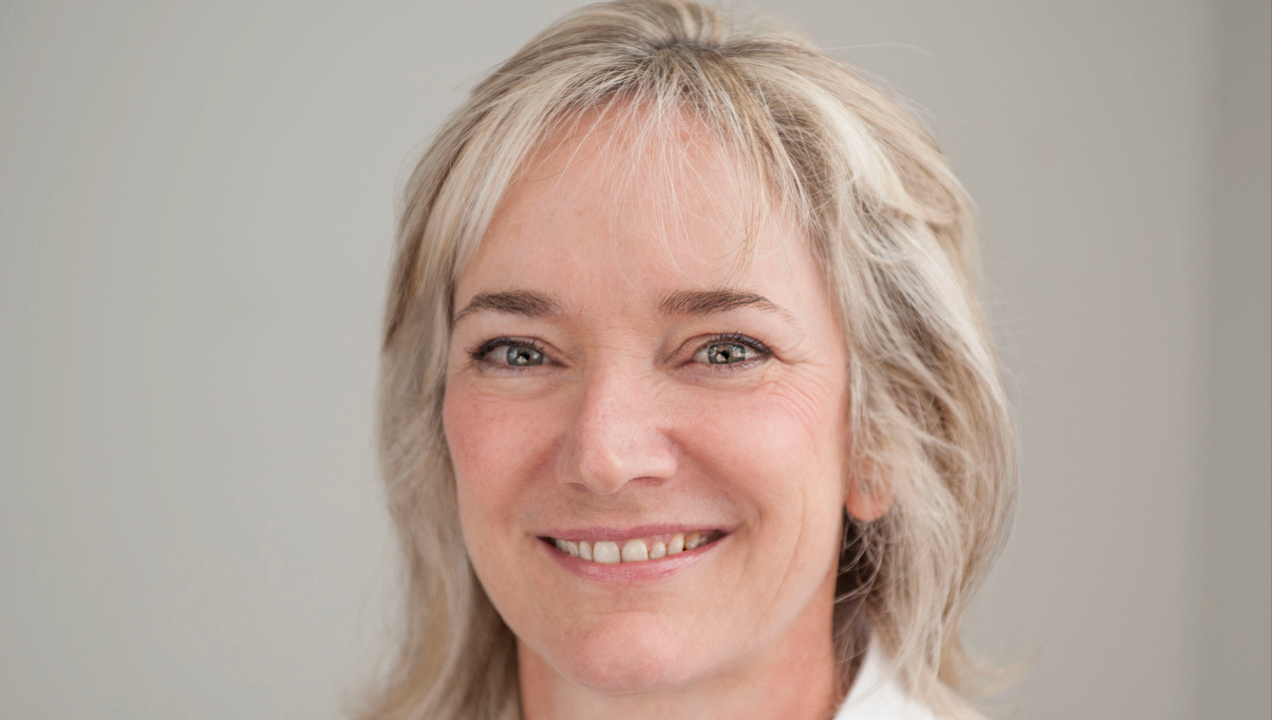
Dr Paula Briggs is a former Chair of the British Menopause Society
Nutrition and exercise need to be at the forefront of midlife health. Those two things could make more difference to wellbeing than anything else in terms of menopause management.
The reason is that falling oestrogen levels change how the body works. “We’re so much more at risk of insulin resistance,” explains Nicki Williams, who helps women going through menopause.
We don’t handle carbs as well as we used to. Muscle is lost faster; digestion can slow and bone density declines. A diet that served you well at 30 may not do the same at 50.
In her clinic, Williams focuses on four key areas:
Balance blood sugar – build meals around protein and healthy fats, swap refined carbs for complex ones and fill the plate with vegetables. Treats stay in the 10 to 20 per cent. “That made the biggest difference to me in terms of stopping the weight gain, making me have more energy, the moods, all of that.”
Prioritise protein – it matters for “every single thing in the body”, says Williams, but it’s particularly important for maintaining muscle mass, which can decline more rapidly as we go through the menopause transition.
Increase fibre and vegetables – greens, cabbage and other cruciferous vegetables support digestion and add the nutrients a midlife body needs.
Add phytoestrogens – organic soy foods such as tofu, tempeh, edamame and soy yoghurt contain plant compounds that can gently mimic oestrogen. “They’re never going to be as powerful as HRT, but they can be really, really helpful for people suffering things like hot flushes.”
Adetutu Aboaba, a health and wellbeing coach and personal trainer who turned 50 this year, made similar changes. “I’ve had to tweak my diet. What I used to do in my 20s and 30s doesn’t help,” she says. Speaking for herself, she has upped her protein, eats more green vegetables for fibre and starts her day with a chia seed pudding topped with sunflower seeds to improve her digestion, since she noticed it was “slowing”. She also lowered her caffeine and alcohol intake.
None of this needs to be rigid. Nutritionist Williams follows an 80/20 approach. “I didn’t want to be too restrictive. I love food and I loved eating.” Nor is it about piling up supplements. “You cannot just say supplements are useless or, on the other side, that supplements will cure it all,” she says. Practitioners recommend them where testing or symptoms point to a deficiency. Dr Briggs adds that bone health relies on diet, exercise and appropriate supplementation of vitamin D and calcium, “whether or not a woman takes HRT”.
HRT vs lifestyle: not either/or
HRT has its place, and Dr Briggs is clear about what it can do. Most women can use it, ideally starting in perimenopause, which in the UK begins on average at 46. It can ease flushes, sweats and urogenital symptoms such as vaginal dryness and recurrent urinary tract infections, while also helping maintain bone density. For women with risk factors such as a BMI over 30, delivering oestrogen through the skin as a patch, gel or spray reduces the risk of complications, including blood clots, compared with taking oestrogen orally.
But Dr Briggs warns against treating it as a fix for everything. “It’s simplistic to consider HRT as a cure-all,” she says. “There are many pieces to this jigsaw, including diet, exercise and management of chronic health conditions.”
Midlife often brings high blood pressure, type 2 diabetes, high cholesterol, insomnia and low mood, and no prescription addresses all of those.
She also busts a common myth: that every woman needs oestrogen, progesterone and testosterone. “This is not true. Past medical history and choice is important,” she says. Not every woman can or wants to take HRT, either. “Women on active treatment for breast cancer or previous breast cancer history should not consider taking it.”
Dr Briggs has researched elinzanetant, a non-hormonal medicine that blocks the pathway triggering hot flushes and night sweats, which offers hope to women “who would otherwise be left out of the menopause conversation”.
Elinzanetant (marketed as Lynkuet) is not yet available on the NHS in England because it is still awaiting a final evaluation and recommendation by the National Institute for Health and Care Excellence (NICE).
Williams’s own story shows how diet, supplements, stress management and exercise carried her through perimenopause alongside HRT. At 52, she started experiencing drenching night sweats every hour or two, brain fog and weight gain she could not shift. With osteoporosis in her family, she chose body identical HRT. “Within a few months, I’d gone back to normal. That was the missing piece for me.”
Even so, HRT is only one part of the picture. She continued to focus on lifestyle, switching from mainly cardio to weight training to help protect her muscles. For her, the message is not about choosing sides in the pro- and anti-HRT debate, but about finding what works for each individual.
Every woman needs to do what’s right for her, and not be told what to do by social media or influencers.
Beyond medicine: movement, connection and knowing yourself
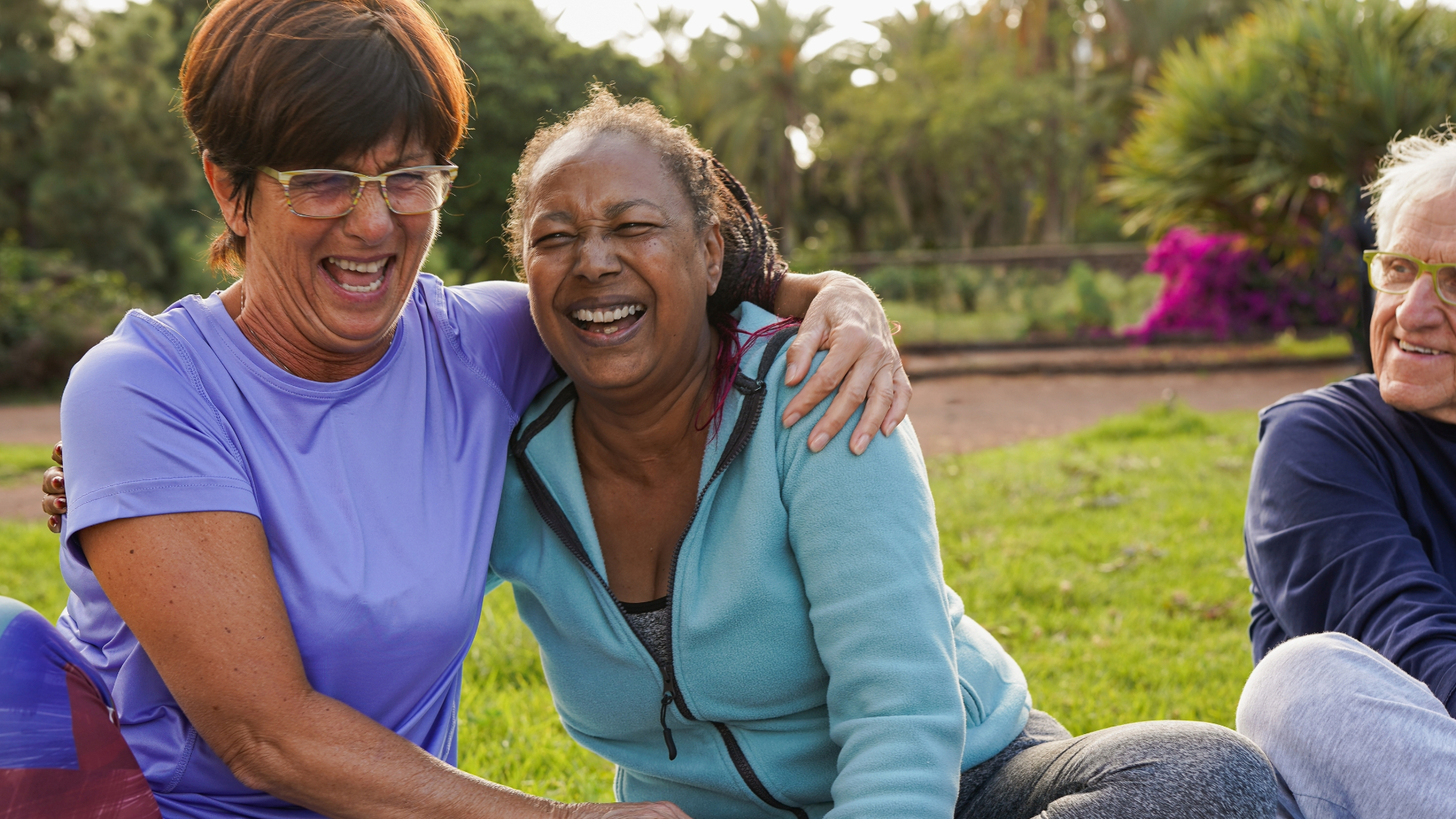
Movement, friendship and laughter all play a part in a positive menopause transition (Shutterstock image)
Adetutu is doing pull-ups as we talk. For her, strength training is the foundation. “It’s helping me on lots of different levels: cognitively, muscle-wise and with my joints.”
Her starting point is:
Getting out of the house, away from your desk and into green or blue space such as a park or canal where you can. Walk with a friend and you combine movement with conversation. From there, build strength for your bones and heart.
The NHS recommends strengthening activities on at least two days a week, alongside 150 minutes of moderate activity. “It’s not just about the cardio. We do need to be building strength in our legs, strength in our bodies.”
Connection matters, too. Spending time with others going through the same stage of life can help ease some of the symptoms of menopause and make this new chapter feel less isolating.
Find a supportive group. There are loads of lovely supportive groups in local leisure centres that don’t cost much. Sometimes they’re free. Just start from where you’re at.
Around two and a half years ago, Adetutu and a handful of other women set up a Menopause Café in Hackney, based on the model of the Menopause Café charity. The idea came from a simple gap. “There just wasn’t anything local where you could go and talk and chat, and just listen and share.”
Each session includes a short talk on topics from sleep and nutrition to pelvic floor health and relationships, but the heart of it is the round-the-table conversation. There is one rule: nobody recommends anything. “We’re only talking about our own experience,” she says. “By doing that, it helps other women to go, oh, I thought I was the only one.”
Many women at the café prefer to talk about “experiences” rather than “symptoms”, feeling menopause can be over-medicalised. As Adetutu puts it, “There’s no silver bullet in any of it.”
With GP appointments often lasting just ten minutes, Adetutu encourages women to arrive with the full picture. Adetutu was an architect before becoming a health coach, so she mapped her cycle in diagrams until a pattern emerged, then took it to her GP and secured a referral to a women’s health hub. Voice notes or a simple diary work just as well.
Nobody can tell you more about yourself than you.
Slow down
Menopause offers a chance to reset habits and put yourself first (Shutterstock image)
The MARIE study, which surveyed 5,228 women in 13 countries, found the UK among those reporting the highest levels of anxiety, depression, physical symptoms and hot flushes. Dr Briggs points to a stressful UK lifestyle and unrealistic expectations of medication. Her advice is to see midlife as a chance to review unhealthy habits, push back against social media and spend time on more fulfilling activities, such as craft and cooking.
Practitioner Williams also brings these threads together in EMBRACE, the framework from her latest book Life After Menopause: eat, move, balance, rest, activate, connect and eliminate. Women choose the tools that suit them. “You might not be a sauna and cold plunge person, but you might want to do some reading or music therapy.”
Start earlier, and see the opportunity
All three agree that the biggest change would be better information, sooner. Dr Briggs would give women the right information and links “10 years plus ahead of the menopause transition so that women were informed”.
Williams wants GPs better equipped. “This affects 50 per cent of the population, they will all go through it,” she says. Asked whether younger women can prepare, she does not hesitate to recommend these tips: start looking after your blood sugar and stress levels, and protein intake as soon as possible.
With women’s life expectancy in the UK in the mid-80s, many can expect to spend 30 years or more beyond their final period. Williams sees that as a chapter worth investing in. “You need your health to be good, for you to do the things that finally you want to be doing.”
Adetutu agrees. “Now I can see there is power in menopause too,” she says. She recalls a woman at the café who described it as meeting herself head-on. “You have to know yourself in lots of different ways that maybe you haven’t done in your 20s or your 30s.”
Food will not solve everything, and neither will a prescription. But a plate built on protein, fibre and vegetables, stronger muscles and a room full of women who understand is a good place to start.