OUR NEXT ONLINE OPEN DAY OF THE YEAR IS HAPPENING 14 NOVEMBER. DON’T MISS YOUR CHANCE TO LEARN ABOUT YOUR NEW CAREER! • BOOK YOUR TICKET FOR THE HEATHER ROSA TRIBUTE AND MITOCHONDRIA EVENT ON 30 OCTOBER • THE ‘BSC (HONS) NUTRITIONAL THERAPY’ AND ‘CERT HE PERSONALISED DIET AND HEALTH’ APPLICATION FOR THE FEBRUARY 2027 COHORT IS NOW OPEN. APPLY BY 10 NOVEMBER TO TAKE ADVANTAGE OF OUR EARLY-BIRD DISCOUNT • OUR NEW, LEVEL 7, POSTGRADUATE COURSE FOR MEDICAL PROFESSIONALS, ALLIED HEALTHCARE PRACTITIONERS AND CAM PRACTITIONERS IS NOW OPEN FOR APPLICATIONS •
OUR NEXT ONLINE OPEN DAY OF THE YEAR IS HAPPENING 14 NOVEMBER. DON’T MISS YOUR CHANCE TO LEARN ABOUT YOUR NEW CAREER! • BOOK YOUR TICKET FOR THE HEATHER ROSA TRIBUTE AND MITOCHONDRIA EVENT ON 30 OCTOBER • THE ‘BSC (HONS) NUTRITIONAL THERAPY’ AND ‘CERT HE PERSONALISED DIET AND HEALTH’ APPLICATION FOR THE FEBRUARY 2027 COHORT IS NOW OPEN. APPLY BY 10 NOVEMBER TO TAKE ADVANTAGE OF OUR EARLY-BIRD DISCOUNT • OUR NEW, LEVEL 7, POSTGRADUATE COURSE FOR MEDICAL PROFESSIONALS, ALLIED HEALTHCARE PRACTITIONERS AND CAM PRACTITIONERS IS NOW OPEN FOR APPLICATIONS •
ION study lifts the lid on plant-based alternatives: nearly double the additives
caption
Some plant-based foods need a lot of additives to taste like the real thing.Some plant-based foods need a lot of additives to taste like the real thing.
image credits
Shutterstock
CATEGORY
FoodNutritionNutritional therapyResearch news
TAGS
dietfoodnutritionnutritional therapy
AUTHOR
Verónica Muñoz Martínez
READ TIME
5 Minutes
PUBLISHED
25 June 2026
SHARE
Key takeaways
A first-of-its-kind ION study found plant-based alternatives in a UK supermarket carried, on average, twice as many food additives as the animal foods they replace: 199 against 100 across 71 matched pairs.
The plant-based products also used more ingredients overall (1,566 versus 1,110) and a wider spread of E-numbers (39 versus 31).
The gap was widest in dairy, meat and fish alternatives. Plant-based cheeses and milks carried the heaviest additive loads, while the animal-based dairy products used no additives at all.
The researchers point back to whole foods: a diet built on beans, lentils, grains and vegetables needs no additives to hold it together.
A first-of-its-kind study finds vegan swaps can pack double the food additives of the animal foods they mimic.
The veggie sausages and oat milk filling up the nation’s trolleys may not be the clean choice they appear to be. New research from the Institute for Optimum Nutrition (ION) experts has found that plant-based alternatives in UK supermarkets carry, on average, twice as many food additives as the animal products they are built to replace.
It began as a Robinson’s dissertation. “One of our supervisors noticed there were quite a lot of food items in alternative products,” says Whittaker. “Vivienne, the first author, took that idea and ran with plant-based products. We later redid the analysis to make it more robust, and that became the published paper.”
Plant-based eating has grown over the past decade, and supermarket shelves have filled with mince, fish fingers, cheeses and yoghurts made from “plants”. While previous research has looked at the nutrients in these foods, few have examined the additives and ingredient lists behind them, or how they compare with the originals.
For co-author Robinson, consumption of meat and animal-based alternatives took off during COVID. “There was a real shift towards plant-based diets, and whenever there’s a new food trend the food industry picks up on it,” she says. “I wanted to see how that played out in the products that copy a really familiar food almost exactly.”
What they found
To find out, the team took a plant-based range from a single UK supermarket and paired each item with its closest animal-based equivalent, matching on factors such as ingredients, packaging, appearance and size. Almond milk was paired with dairy milk, vegan brownies with dairy brownies, plant-based meat with the animal version. Lasagne, coleslaw, pesto, mayonnaise, yoghurt and cake were also included. After the matching process, 71 like-for-like pairs remained for analysis, all available on shelves in late October 2025.
The plant-based products contained 199 food additives in total, against 100 in their animal-based counterparts. They carried more ingredients overall, 1,566 versus 1,110, a difference of 456. They also drew on a wider range of E-numbers: 39 compared with 31. Of the 50 E-numbers identified across the whole sample, 20 appeared in both groups, meaning plant-based and animal products often relied on different additives as well as more of them.
The price of a convincing copy
Meat consumption in the UK has fallen from 103.7 to 86.3 grams per capita, while plant-based alternatives have continued to gain ground. At the same time, shoppers are paying more attention to long, unfamiliar ingredient lists and ultra-processed foods, a shift the food industry calls the “clean label trend”. Many of the people choosing plant-based products in search of something more natural may be eating something more processed.
Animal foods have textures, colours and properties that are difficult to imitate solely from plants, so manufacturers use technical solutions. The dairy alternatives in the sample used calcium carbonate to reproduce the whiteness of milk, and carotenes to give vegan cheese a yellow colour. Methylcellulose and sodium alginate appeared repeatedly in the meat and fish substitutes, doing the binding and texturising work that animal protein does on its own. Gellan gum, lecithins and modified starches also featured. The closer a plant-based product comes to resembling its animal model, the more processing it tends to require.
The difference was largest in the categories where imitation is hardest: dairy, meat and fish alternatives, along with other savoury items. The animal-based dairy products in the sample used no food additives at all.
Most of the gap comes down to the hard work of imitation. Plant ingredients struggle to match the texture, colour and behaviour of animal foods, so manufacturers turn to chemistry. The dairy swaps used calcium carbonate to fake the whiteness of milk and carotenes to lend vegan cheese its yellow. Methylcellulose and sodium alginate cropped up again and again in the meat and fish substitutes, doing the binding and texturising that animal protein manages on its own. Gellan gum, lecithins, modified starches and emulsifiers in dairy and meat alternatives rounded out the list. The more lifelike the product, the more processing it tends to need. “The only way of creating those foods is using refined ingredients, food additives and processing techniques that don’t even make it onto the label,” Whittaker says.
Robinson argues that a long ingredients list in a product isn’t the red flag we tend to think it is. “In a ready meal like a green Thai curry there are loads of ingredients, but that’s herbs and spices, all for flavour,” she says. “More ingredients don’t mean more additives, and it was useful to be able to challenge that assumption.”
She advocates for a diet free from ultra-processed foods:
The more time we spend cooking, rather than reaching for convenience, the easier it is to dodge these additives.
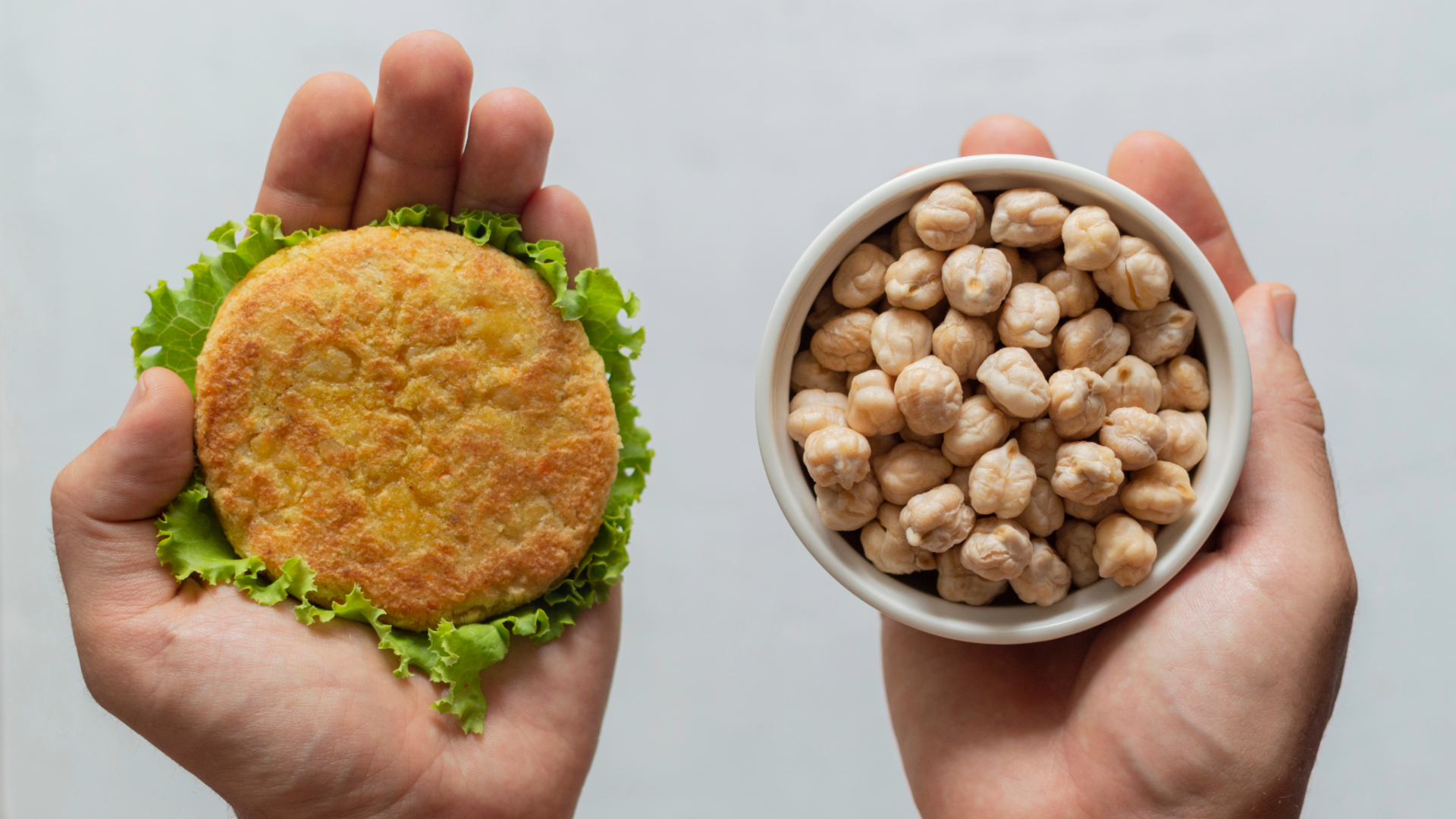
Instead of an ultra-processed burger, you can make your own chickpea burgers with condiments instead of artificial additives
The researchers are careful not to oversell the results. They looked at a single range, did not measure how much of each additive was used, and did not track how often people actually eat these foods. Every additive in the study is under UK safety regulations. “Our study wasn’t assessing whether these products were healthy,” he adds. “It was assessing whether they had more additives in, and a greater diversity of them.”
This study has its limits: they looked at products from a single supermarket and didn’t measure the level of processing involved. The authors hope future research will test whether the pattern holds across other brands, retailers and countries.
For anyone wanting to fully follow a clean diet free from additives, the practical point is simple: beans, lentils, grains and vegetables needs no E-numbers to hold them together.
A diet built on whole foods and personalised nutrition is an approach we have long championed at ION.